Wildcrafting 

You have to register before you can add new data to this site.
User Name:
Password:
  • Home
  • Browse Plants
  • Search Plants
  • Submit New Plant
  • All Marked Plants
  • Contact Us


Asphodelaceae


Pan to Address: 

Asphodelaceae
The healing plant


To view more pictures on this plant, click the "All Images" tab above.
To view or mark new locations where this plant can be found, click the "Locations" tab above.


  • Scientific Name: Asphodelaceae
  • Common Name(s): Aloe
  • Edible: no
  • Medicinal: yes
  • Parts Used: stem


  • Beowulf65
    4 Aug, 2008

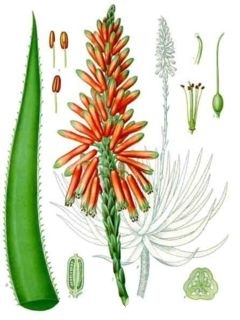
    Aloe, also written Aloë, is a genus containing about four hundred species of flowering succulent plants. The genus is native to Africa and is common in South Africa's Cape Province and the mountains of tropical Africa, and neighbouring areas such as Madagascar, the Arabian peninsula and the islands off Africa. The APG II system (2003) placed the genus in the family Asphodelaceae. In the past it has also been assigned to families Aloaceae and Liliaceae. Members of the closely allied genera Gasteria, Haworthia and Kniphofia which have a similar mode of growth, are also popularly known as aloes. Note that the plant sometimes called "American aloe" (Agave americana), belongs to Agavaceae, a different family. Most Aloes have a rosette of large, thick, fleshy leaves. The leaves are often lance-shaped with a sharp apex and a spiny margin. Aloe flowers are tubular, frequently yellow, pink or red and are borne on densely clustered, simple or branched leafless stems. Many species of Aloe are seemingly stemless, with the rosette growing directly at ground level; other varieties may have a branched or unbranched stem from which the fleshy leaves spring. They vary in colour from grey to bright green and are sometimes striped or mottled. Some aloes native to South Africa have large trunks and are called aloe trees. Historical uses: Since the era of Ancient Egypt, humans have been using aloe. Cleopatra was said to have used aloe as a beauty tool. The Egyptians discovered the healing powers of aloe. They used it as one of the ingredients of embalming fluid. In the 10th Century, the Europeans were introduced, where it became an important ingredient in many herbal medicines. By the 16th Century, aloe arrived in the West Indies, where it is grown and harvested still today. There are over 300 different types of aloe, but only a mere few were used traditionally as an herbal medicine. This includes aloe perryi (found in northeastern Africa) and aloe ferox (found in South Africa). But the one that tops the list of popularity is aloe vera. It was and still is the most commonly used type of aloe. The Greeks and Romans used aloe to treat wounds. In the Middle Ages, the yellowish liquid found inside the leaves was favored as a purgative. Some species, in particular Aloe vera are used in alternative medicines and in home first aid. Both the translucent inner pulp and the resinous yellow exudate from wounding the Aloe plant are used externally to relieve skin discomforts. Systematic reviews of randomised and controlled clinical trials have provided no evidence that Aloe vera has a strong medicinal effect. Other research however suggests Aloe vera can significantly slow wound healing compared to normal protocols of treatment. Today, the gel found in the leaves is used for soothing minor burns, wounds, and various skin conditions like eczema and ringworm. The use of this herbal medicine was popularized in the 1950's in many Western Countries. The gel's effect is nearly immediate, plus it also applies a layer over wounds that is said to reduce the chance of any infection. There have been very few properly conducted studies about possible benefits of aloe gel taken internally, since the Aloe extract is toxic, yet apparently anti-carcinogenic. Data also suggests that components of Aloe inhibit tumor growth. There have been some studies in animal models which indicate that extracts of Aloe have a significant anti-hyperglycemic effect, and may be useful in treating Type II diabetes. These studies have not been confirmed in humans. On May 9, 2002, the U.S. Food and Drug Administration issued a final rule banning the use of aloe and cascara sagrada as laxative ingredients in over-the-counter drug products. According to W. A. Shenstone, two classes of aloins are to be recognized: (1) nataloins, which yield picric and oxalic acids with nitric acid, and do not give a red coloration with nitric acid; and (2) barbaloins, which yield aloetic acid (C7H2N3O5), chrysammic acid (C7H2N2O6), picric and oxalic acids with nitric acid, being reddened by the acid. This second group may be divided into a-barbaloins, obtained from Barbadoes aloes, and reddened in the cold, and b-barbaloins, obtained from Socotrine and Zanzibar aloes, reddened by ordinary nitric acid only when warmed or by fuming acid in the cold. Nataloin (2C17H13O7•H2O) forms bright yellow scales. Barbaloin (C17H18O7) prismatic crystals. Aloes also contain a trace of volatile oil, to which its odour is due.
    Current Rating: 0.0000
    All Pictures

    The healing plant


    • Menu

      • Foraging Etiquette
      • What to Mark
      • Our Submission Contest
      • Member Ranks
      • Tutorial
    • Plants

      • Browse Edible Plants
      • Edible Plant Search
      • USDA Database Search
      • All Plants by State
      • Submit New Plant
    • Statistics

      • Forum Posts: 399528
      • Forum Members: 11116
      • All Plants: 89774
      • Wildcrafting Plants: 223
      • Plant Pictures: 679
      • Locations Plotted: 2790
    • Recent Pictures

      • Tastes like scrambled eggs.  Puffball
      • Old free source pic for clarity and easy ID
      • Caplinger Mills, Missouri
      • Trillium sessile L.


    • Privacy Policy
    • Contact Us
      • Site Copyright © Jalic Inc. 2005-2013. All Rights Reserved.