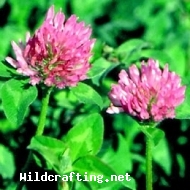
To view more pictures on this plant, click the "All Images" tab above.
To view or mark new locations where this plant can be found, click the "Locations" tab above.
Scientific Name:Trifolium spp
Common Name(s): Clovers
Edible: yes
Medicinal: yes
Parts Used: leaf
crashdive123 20 Mar, 2010
Familiar weeds of field and wayside with dense compact heads of tiny pealike flowers and 3 leaflets. Numerous species with white, pink, red, or yellow flowes.
Current Rating: 0.0000
crashdive123 20 Mar, 2010
Use: Salad, cooked green, tea, flour. Although not among the choicest of wild foods, clovers are both abundant and rich in protein. The flowerheads and tender young leaves are difficult to digest raw, but can be eaten in quantity if soaked for several hours in slaty water or boiled for 5-10 minutes. The dried flowerheads make a delicate healthful tea when mixed with other teas. The dried flowerheads and seeds can be ground into a nutritious flour.
Current Rating: 0.0000
crashdive123 20 Mar, 2010
Buffalo Clover, T. stoloniferum. Flowers white or tinged with red. Leaves branch from stem; leaflets heart shaped (notched at tip). Long basal runners. 4-16 inches tall. Where found: Dry woods, prairies. South Dakota to West Virginia, south to Kansas and Kentucky. Flowers: May – August.
Current Rating: 0.0000
crashdive123 20 Mar, 2010
White Clover, T. repens. White or tinged with pink. Leaves and flowerhead on separate stalks from a creeping runner. Leaflets with pale triangular markings. 4 – 10 inches tall. Where found: Roadside, lawns, Throughout. Flowers: April – October.
Current Rating: 0.0000
crashdive123 20 Mar, 2010
Alsike Clover, T. hybridum. Pale pink or whitish. Leaves unmarked; branching from stems. 1-2 feet tall. Where found: Fields, roadsides. Throughout. Flowers: April – October.
Current Rating: 0.0000
crashdive123 20 Mar, 2010
Red Clover, T. pretense L. Familiar biennial or sort-lived perennial; to 18 inches. Leaves divided into 3 oval leaflets; leaflets fine=toothed, with prominent “V” marks. Flowers pink to red, in rounded heads. Flowers May – September. Where Found: Fields, roadsides. Throughout. Uses: Historically, flower tea has been used as an antispasmodic, expectorant, mild sedative, “blood purifier”; for asthma, bronchitis, spasmodic coughs; externally, a wash has been used as a folk cancer remedy, including the famous Hoxsey treatmena, anf or athlete’s foot, sores, burns, and ulcers. Flowers formerly smoked in anti-asthma cigarettes. Science has not confirmed traditional uses. However, Red Clover contains many biologically active compounds, including phytoestrogenic isoflavones, such as genistein, diadzen, formononetin, and bochanin A, among others Phytoestrogens activate estrogen receptors in mammals. Epidemiological studies provide evidence that certain dietary components can have a significant effect on the incidence and location of cancers in humans. A laboratory study found that biochanin A inhibits the activation of cancer. Warning: Fall or late cut hay in large doses can cause frothing, diarrhea, dermatitis, and decreased milk production in cattle. Deseased clover, externally showing no symptoms, may contain the indolizidine alkaloid slaframine, which is castanospermine, now being studied for anti-AIDS and antidiabetic activity.
Current Rating: 0.0000
crashdive123 20 Mar, 2010
White Clover – uses: American Indians adopted leaf tea for colds, coughs, fevers, and leucorrhea. In European folk medicine, flower tea is used for rheumatism and gout. Like Red Clover, and probably most clovers, White Clover contains the etrogenic isoflavone genistein, with a multitude of activities, including cancer preventative and antioxidant activity.